


← back
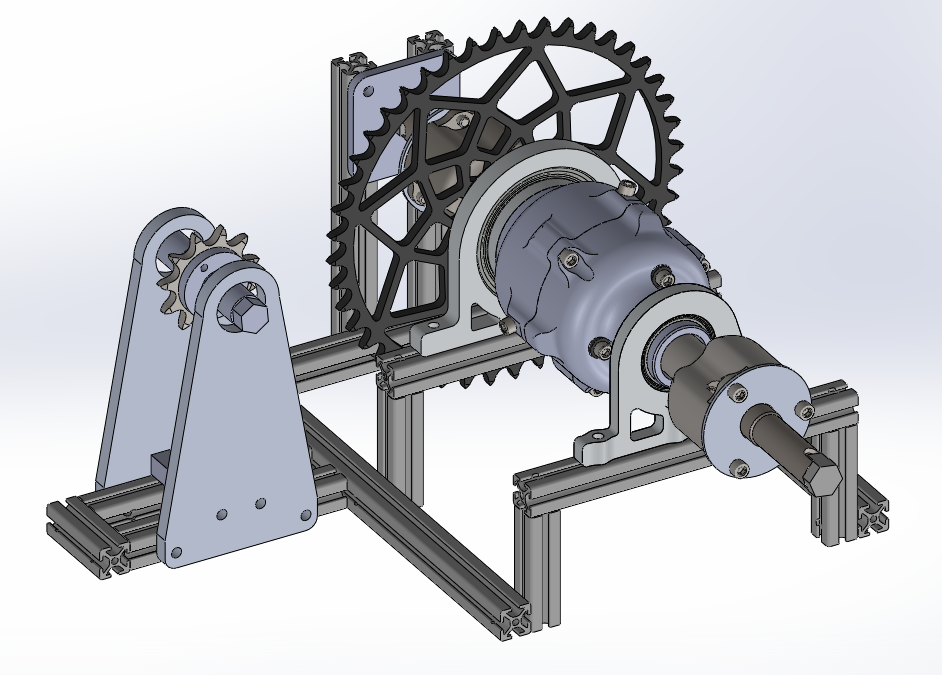
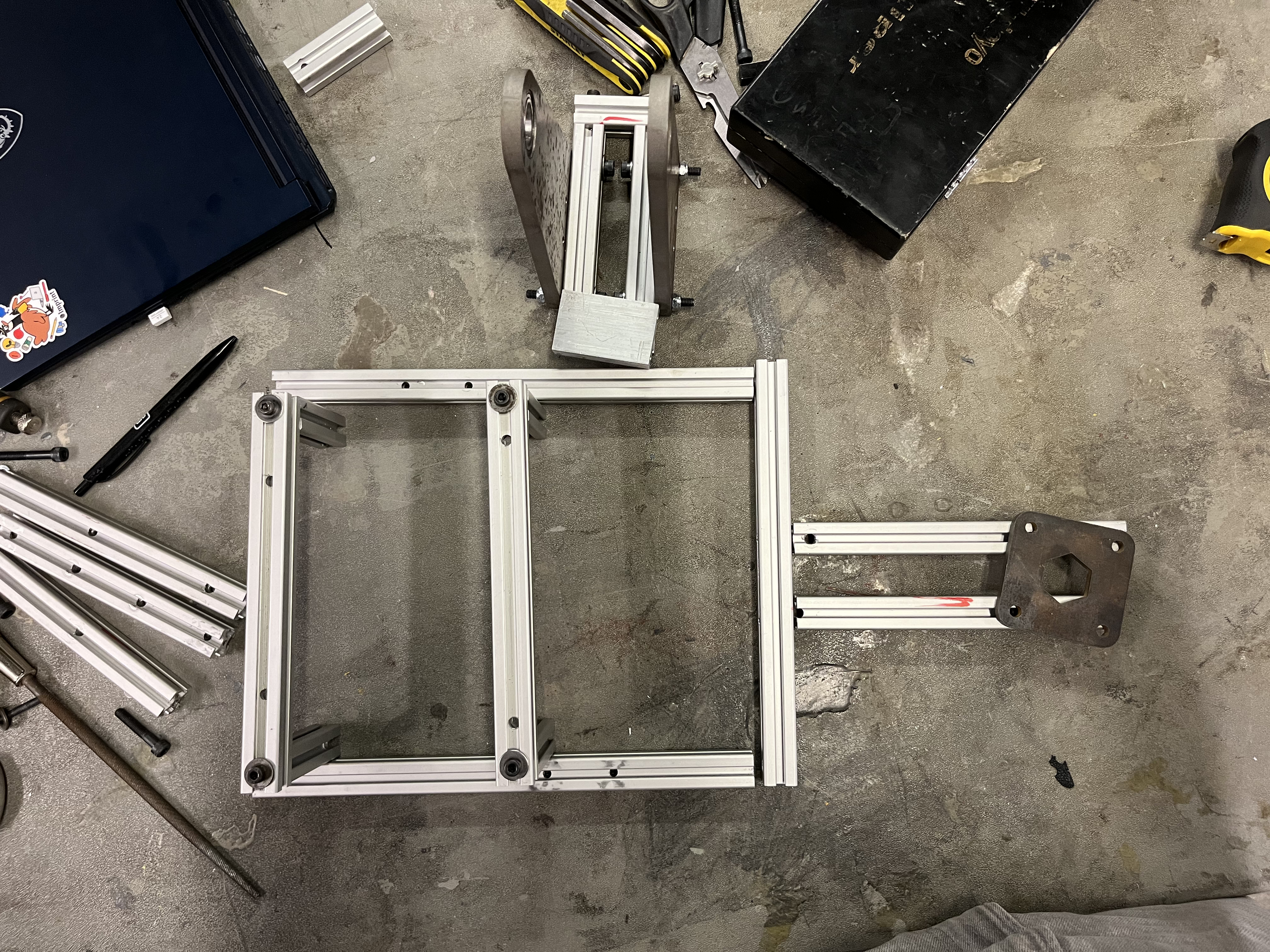
The design was made with 3 criteria in mind: ease of installing/removing the diff, stability, and ease to test. It was fairly simple to make a design which could hold the diff in a stable position, along with a mock motor shaft to be able to apply torque. The 2 main support beams are modelled to be the same as the tubing on the car which the diff is mounted to, so installation is as easy as it can be. the test bench can sit flat on a table and can be clamped down for easy testing.
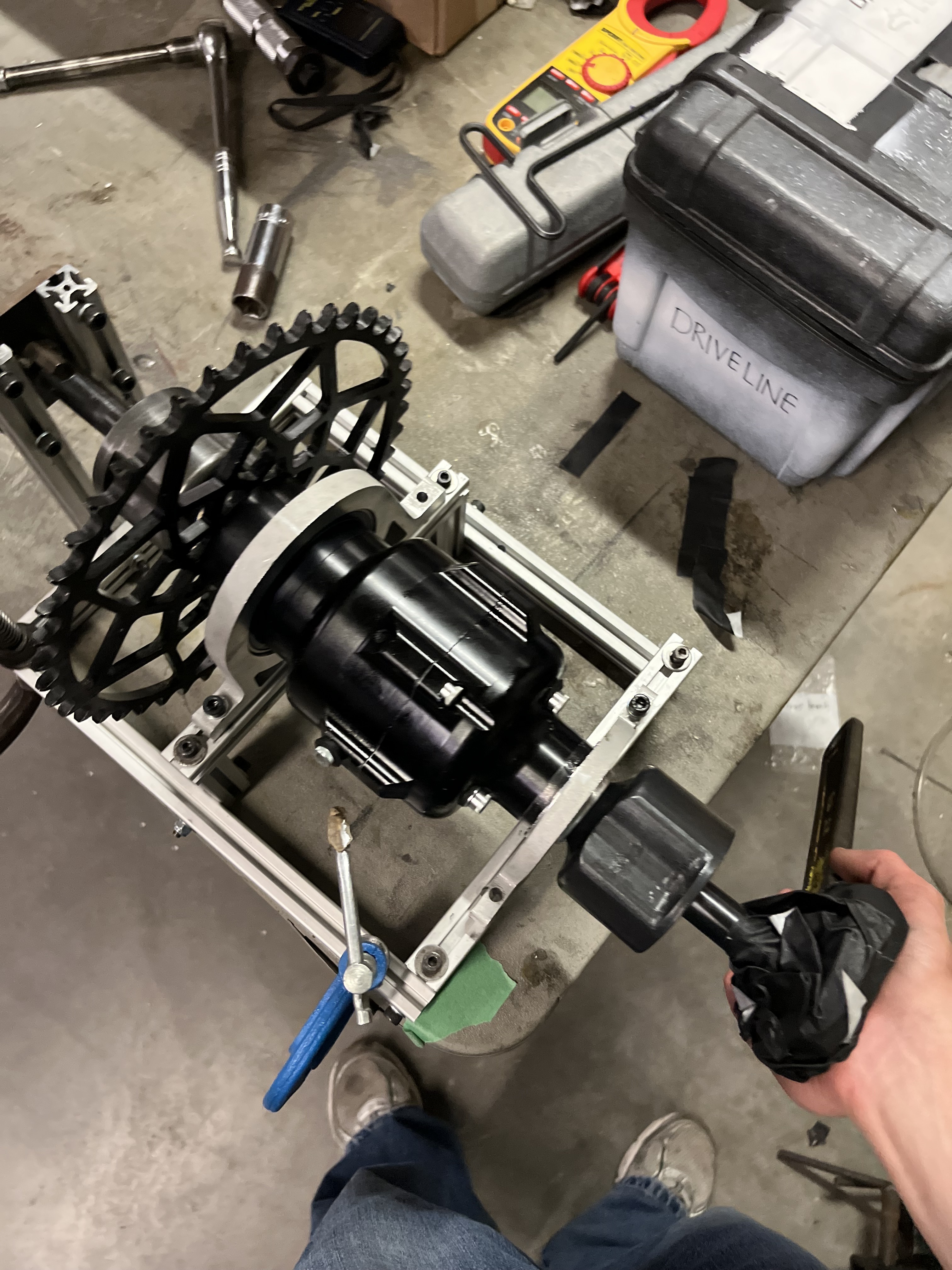
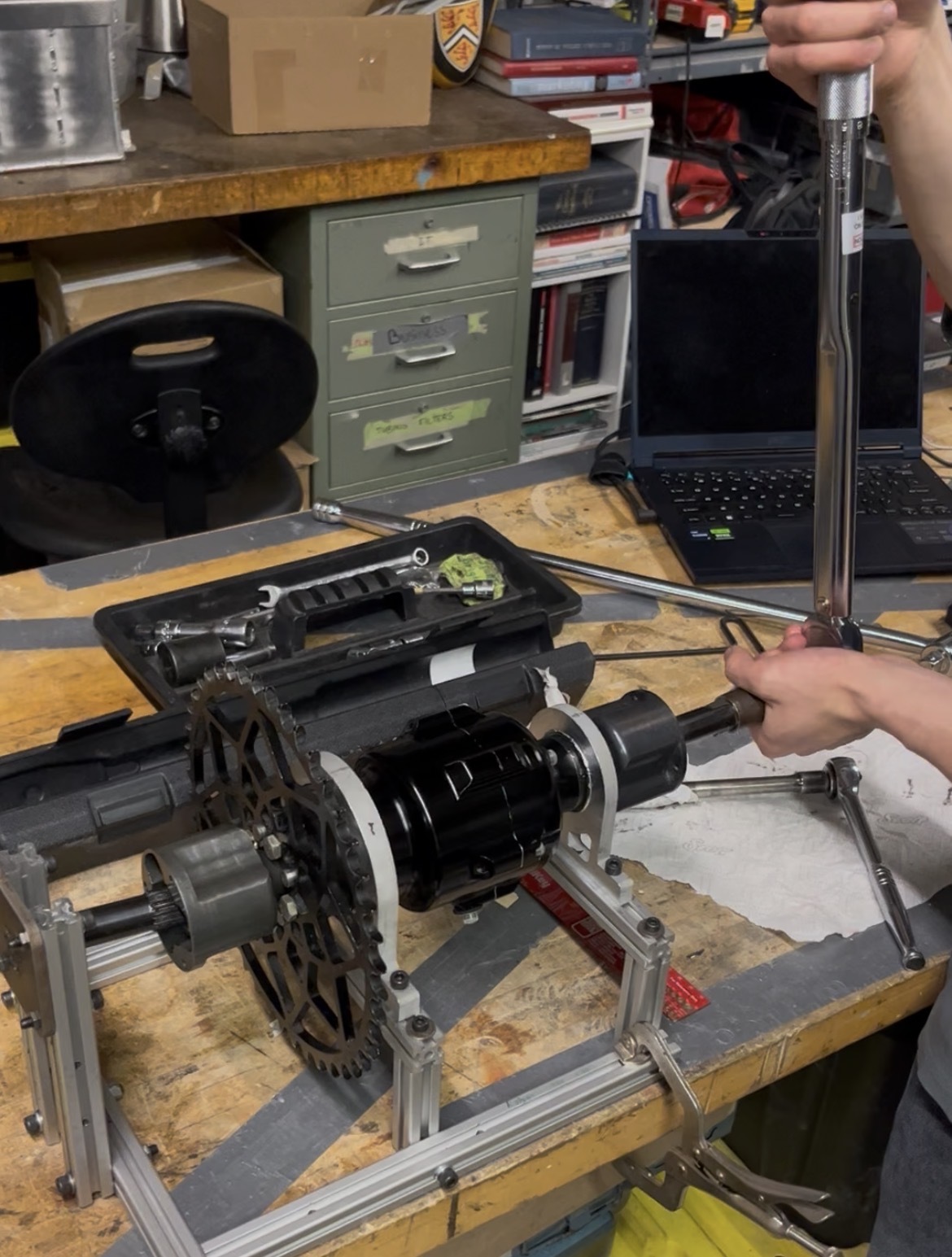
The bench proved to be quite unstable while testing because of the sheer amount of torque needed to "open"
the differential, but this was easily solved by clamping it to the table. The only pitfall of this was that
you must redo the clamps on the opposite side of the bench should you wish to test the other direction of turning.
The first couple sessions of using the test bench were used to perfect the test plan which was made prior to manufacturing.
Some things that were verified or discovered experimentally:
Now that it had been confirmed that it is possible to tune the characteristics of the differential based on component wear and bolt tightness, data can be collected. This is in progress as of May 2026!